
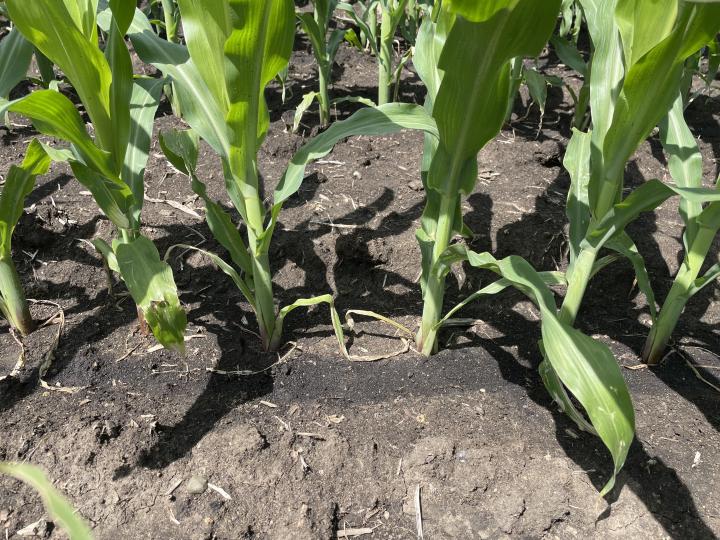
Heatwaves are becoming an increasingly common challenge for growers, and high temperatures combined with dry, windy conditions can push crops into stress far sooner than expected. Heat stress doesn’t just affect plant comfort — it can reduce photosynthesis, limit nutrient uptake, depress yields, and undermine fertilizer efficiency.
While weather can’t be controlled, growers can help their crops cope better by managing nutrient placement, timing, and delivery. In-season nitrogen strategies — including nitrogen Y-drops and nutrient Y-drops — are powerful tools in a grower’s toolkit when it comes to supporting crops during heat events.
Plants maintain their internal temperature and water balance through transpiration — the process of water evaporation through the leaves. When air temperature rises and humidity drops, transpiration increases. If soil moisture is limited or nutrient availability doesn’t meet plant demand, crops struggle to keep up.
Under excessive heat:
Heat stress not only slows growth but can also create nutrient deficiencies that show up long after the heatwave has passed.play.
Heat stress doesn’t just drain soil moisture — it changes how nutrients behave in the root zone. Nitrogen and other mobile nutrients can be lost through volatilization or leaching, especially if they remain on the surface or are not placed near active root zones.
Precision placement technologies — such as nutrient Y-drops and nitrogen Y-drops — help deliver fertilizer closer to where plants can access it quickly and efficiently. This increases nutrient uptake when the plant most needs it and reduces the risk of losses due to heat and evaporation.
Good placement also:
WEven the best placement can be undermined by poor timing. Heat waves often occur unpredictably, but growers can monitor crop development and weather forecasts to plan applications that avoid peak stress windows.
Strategies that help include:
By matching nutrient availability to plant demand — rather than applying too early or too late — growers improve efficiency and reduce the risk of nutrient loss in high temperatures.
Water availability is a linchpin in crop heat resilience. Even with perfect nutrient placement, if roots can’t access water, stress symptoms will manifest. However, balanced fertility encourages vigorous root systems that explore more soil volume and help plants withstand heat.
Precision application systems like nitrogen Y-drops, when combined with moisture-conserving practices (e.g., cover crops, conservation tillage), help create conditions where crops are better positioned to maintain hydration and nutrient uptake under heat stress.
Successful heat stress management usually combines multiple tactics:
No single tactic eliminates heat risk, but an integrated strategy improves crop resilience and long-term productivity.steps don’t eliminate weather risk, but they help crops respond more effectively when stress occurs.
Heatwaves are an unavoidable part of growing seasons, and their impact on plant physiology can be significant. But growers have tools and approaches available — especially precision nutrient placement systems like nitrogen Y-drops — to mitigate stress and help crops stay productive.
By combining thoughtful timing, efficient placement, and moisture management, growers can protect yield potential even under challenging conditions.